Bitten by The Black Dog
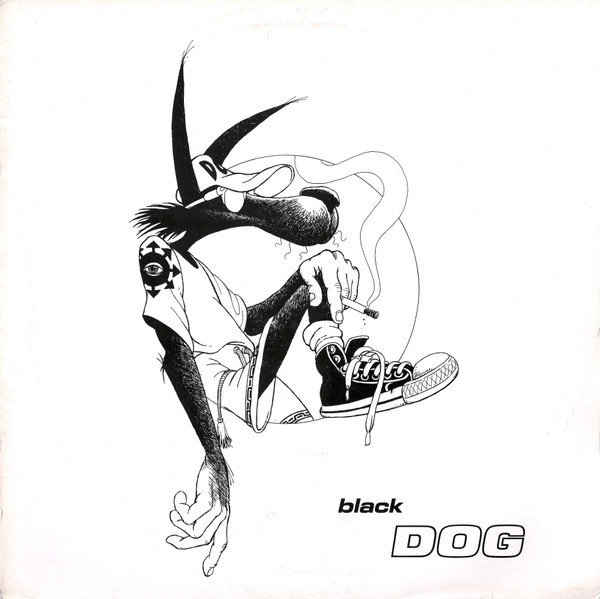
Yesterday I learned Ken Downie of the UK electronica group The Black Dog has died, and because The Black Dog is my favourite “IDM” (Intelligent Dance Music) group I thought I’d write something about them, in honour of him.
1989 - 1995
The Black Dog commenced work in 1989, when Ed Handley and Andy Turner answered an advert that Ken Downie had placed in a music mag[1]. The first phase of the group’s existence, from 1989 to 1992, featured the release of a series of EPs. The musical style was an ebuilliently eclectic mixture of techno and breakbeats, sounding unlike anything else at the time: by turns thoughtful, intricate, jazzy, and silly. Above all the Black Dog was early, predating the term IDM by four years. To provide a specific qualifying example, the first released Black Dog track, Virtual, contains the refrain “World world world / I sit in my room / Imagine the future”. That’s IDM in a nutshell.
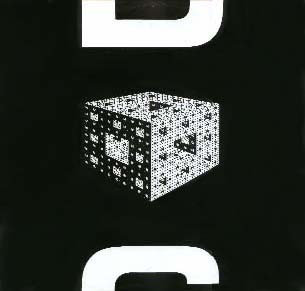
I can’t say that the early EPs (now collected on the much later compilations Book of Dogma I & II) are my favourite Black Dog product, but they were considered revolutionary at the time, and the seeds of what was to come are very much sown in them. My favourite of the four EPs is the first one, Virtual from 1989 (especially the last track Ambience With Teeth; based on clues from later tracks I suspect it was primarily composed by Ken Downie).
I don’t tend to bang on too much about labels but the Black Dog’s history is marked to an unusual degree by who released their music. The first three EPs were self-released, while a further three were released on General Production Recordings (GPR).
As well as EPs released under the name Black Dog, the group released works by subunits of the group with the production credited to “Black Dog Productions”. The major artefacts of Black Dog Productions are an album, Mbuki Mvuki, produced by Turner & Handley as Plaid; the marvellous Parasight EP by Handley under the monitor Balil, the “Black Dog productions EP”, with tracks creditd to Balil and Atypic (Turner). The most significant release was the album Bytes, released on Warp records as part of the seminal IDM Artifical Intelligence series. This compilation featured tracks by all three Black Dog members under various monikers. Downie hadn’t contributed anything to the other Black Dog Productions initiatives, but here he contributed three tracks, the most significant being Carceres Ex Novum (as Xeper), a thoughtful pads + pianos + breakbeats number. My favourite tracks tend to be those involving Handley, most notably the dreamy Merck, credited to Balil. The album rattles along beatily at an restless pace from go to whoa. All up Bytes is very solid, a great summation of the group’s work up to that point.
A second 1993 album was released, this time on GPR. Named The Temple of Transparent Balls and credited to The Black Dog, the album has a more ambient vibe than Bytes. I’m reasonably confident Kings of Sparta and The Crete that Crete Made have Downie’s hand in them. Other highlights include Cost I and II, 4.7.8, and Sharpshooting on Saturn. Although the production is less slick than Bytes (which I believe was recorded later but released earlier), there’s a greater coherence to Temple. From the first track to the last, the album interweaves threads of futurism and ancient mysticism. Extrapolating from the Crete reference, I like to imagine the album might have been made by the Minoan civilisation, had they posessed synthesizers.
Bytes and Temple of Transparent Balls laid the foundations for The Black Dog’s third album, 1995’s Spanners. In my view it is their masterpiece: a full length CD that contains no filler (except maybe for the slightly meandering, momentum-sapping Further Harm). The more raucous elements have been stripped away without removing the humour, the production feels airy and expansive, and the rhythm programming is complex and features interesting time signatures (a later Plaid hallmark). It’s harder to tell who made what, but I’ll take a punt and say that Downie had a bit to do with Nommo, Chase the Manhattan, and The End of Time; Handley and Turner are more prevalent on Barbola Work, Tahr, Chesh, and Psil-Cosyin. Probably…
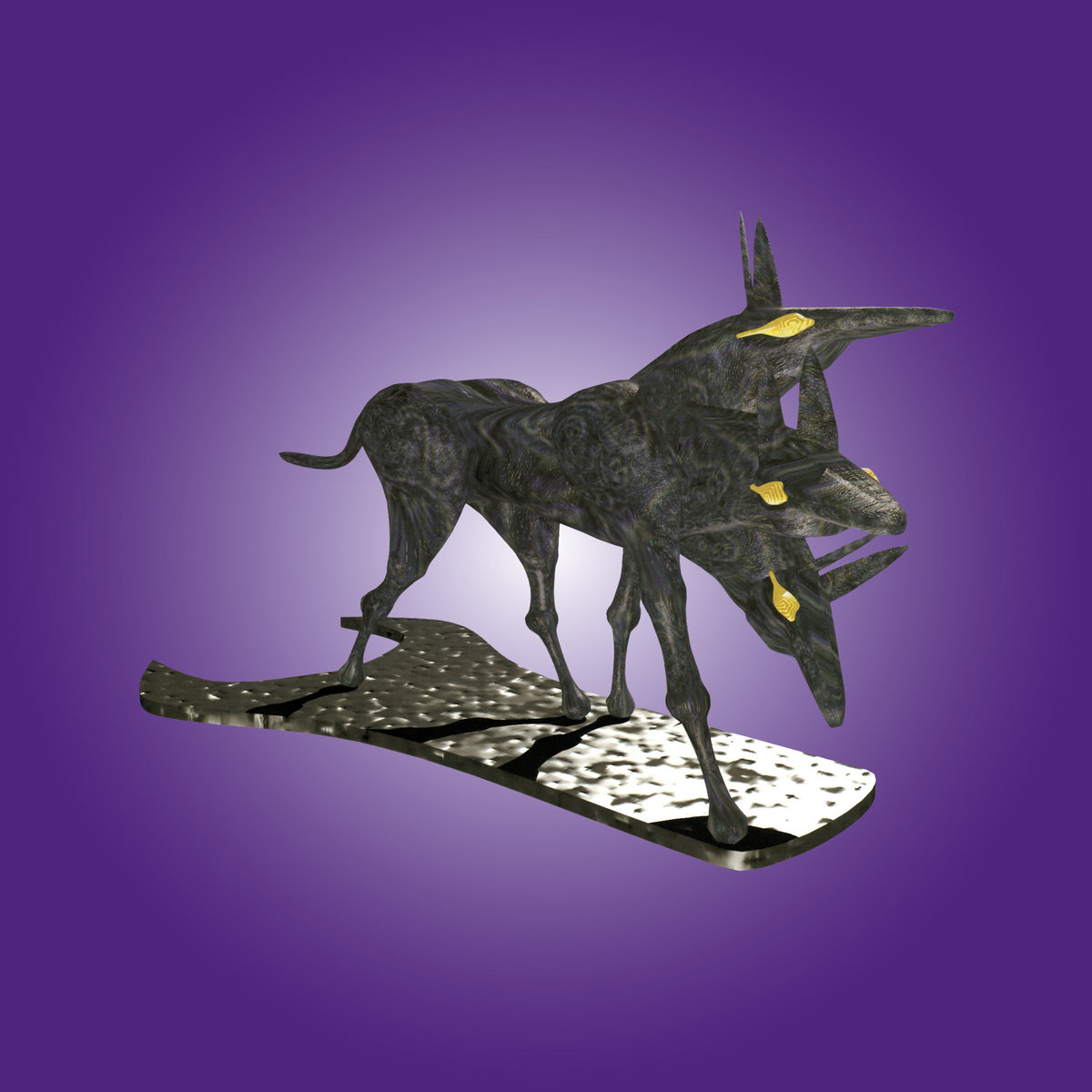
The group had reached new heights, but the group had also broken up. Handley and Turner decided to leave The Black Dog and take Plaid “solo”. As I remember from reading interview(s) from the late 90s, they had found Downie a bit difficult or unreliable to work with, with a suggestion he hadn’t always pulled his weight [2]. This sort of break up, while common for rock groups, is rarer for electronica acts, mainly because electronica is usually conducted solo (Aphex Twin), or in a highly attuned duo (Autechre, Orbital), or as a series of ever-changing line-ups (The Orb). Plaid’s assessment of the situation appears coded into the title of their post-break up album: “Not for Threes”.
Setting aside the why, I felt the break up was a tragedy. Spanners was such a great album it seemed a terrible waste to immediately disassemble the group that created it. In retrospect I think the chances of a followup album being as good was unlikely - in a reversion to the mean sense - and perhaps personality-wise the group had run its course. Objectively I can understand that Spanners was the end of the road, but at the risk of sounding melodramatic, I’ll always be haunted by the ghost of a Spanner follow-up that never happened.
There’s one final artefact of the original Black Dog lineup, a Black Dog Peel Session broadcast in early 1995. It’s a bit of a mixed bag, with only one genuinely brilliant track, the beautiful and ultimately enigmatic Simperton (a likely Handley number).
1996
After the disappointment of losing his collaborators, Downie decided to soldier on under the Black Dog name (which Handley and Turner’s weren’t thrilled about). What to do next? Downie had inherited The Black Dog’s three album contract with Warp Records, then (and maybe still, for all I know) UK’s premier electronica label. He had one further album to deliver.
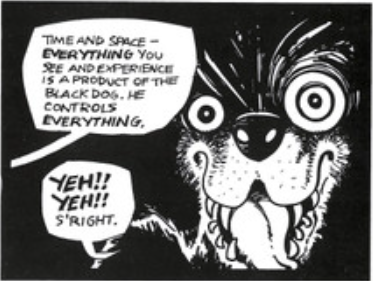
That album, released in 1996, was called Music for Adverts (and Short Films). It has 26 tracks, the majority of which are (and have to be) short fragments less than two minutes long. This structure rattles the listener along from one idea to another like a pinball around its machine. There are some genuinely brilliant moments in the tracks Strange Hill, Crayola, Euthanasia, and Stratus/Dissidence, but also moments of bafflement and frustration (the opener Dumb and Dumber seems calculated to make listeners demand their money back; No Lamers is good, but it’s mystifyingly called “No Lamers”). In stark contrast to Spanners’ crystalline production quality, Music for Adverts is mixed in mono, sounding like it was made with a mod tracker. Shorn of his former collaborators’ assistance, Downie’s production chops didn’t seem to have improved much since the early 90s. Now there’s nothing wrong with that, but in that situation you need to find some sort of production or engineering assistance to make up for your deficiencies, and that’s clearly not what happened here (or for several years afterwards).
That Music for Adverts is a letdown is without doubt. With the ropey production, duff track and album names, and material that seemed wilfully difficult, it’s hard to know whether Downie meant to sabotage his career, or if he really thought Music for Adverts was a winner. Here’s what he had to say about it on his website (at least when the Internet Archive caught up with it in 2001):
Subsequently we [sic] released Music for Adverts (and short films) on Warp - an album that demands emotional commitment from the listener. An antidote to prolific, soul-less electronica. The brave media readily supported us (film maker Gus Van Sant describes it as “advanced techno”). Sadly poor distribution has made it rather hard to obtain. As the third album by The Black Dog this completes our recordings with Warp… we no longer entirely fit within with their label identity, so we’ve parted company, enabling us to realise projects that were otherwise deemed inappropriate.
There’s a bit of defiance there, but saying an album demands “emotional commitment” is thoroughly unconvincing. I didn’t fall in love with Spanners because I was emotionally committed to it, I became “emotionally committed” because it was a great album.
I imagine Music for Adverts will have some whole-hearted fans. Clearly I’m not one of them: I confess the album leaves me perplexed to this day. But whether or not Music for Adverts is a misunderstood masterpiece, an intentional joke, or merely a colossal dud, it would be 9 years before The Black Dog had another label deal as secure as what it had had.
Not for Threes
While Downie sifted through the apparent wreckage of his career, Plaid’s first post-breakup release, Not for Threes, was released in 1997. It had polished production and canny collaborations, including with singers Nicolette and Bjork. Genre-wise the album casts a wide net, with a jungle track, a breaksy track, a cod-classical track, a trance track, & so on. Being a little bit of everything isn’t a bad strategy if you’re reinventing yourself. The only track that hints at any kind of Black Dog legacy is the thunderous opener, Abla Eedio. Not For Threes is a confident, forward-looking career restart. Comparing it with Music for Adverts does not do the latter any favours. But I will say that I find Not For Threes too slick, too twee, too comfortable, and ultimately too safe. I come away from both albums thinking if only there was some ways their creators could work together you’d have an album that both sounds terrific and is a little bit daring. Even so, Plaid had commenced on what would become a quarter century relationship with Warp; The Black Dog’s future would be an open question for many years to come.
1997 - 2004
The Black Dog’s next outing was a second Peel Session, at the start of 1997. After that came the 1997 “Live in Toronto” recording/demo, which has more engaging versions of tracks from Music for Adverts, plus new material never formally released. It’s a shame that this artefact couldn’t have been substituted for Music for Adverts, as I think the first half hour of the recording is Downie’s finest work. Still in mono, though…
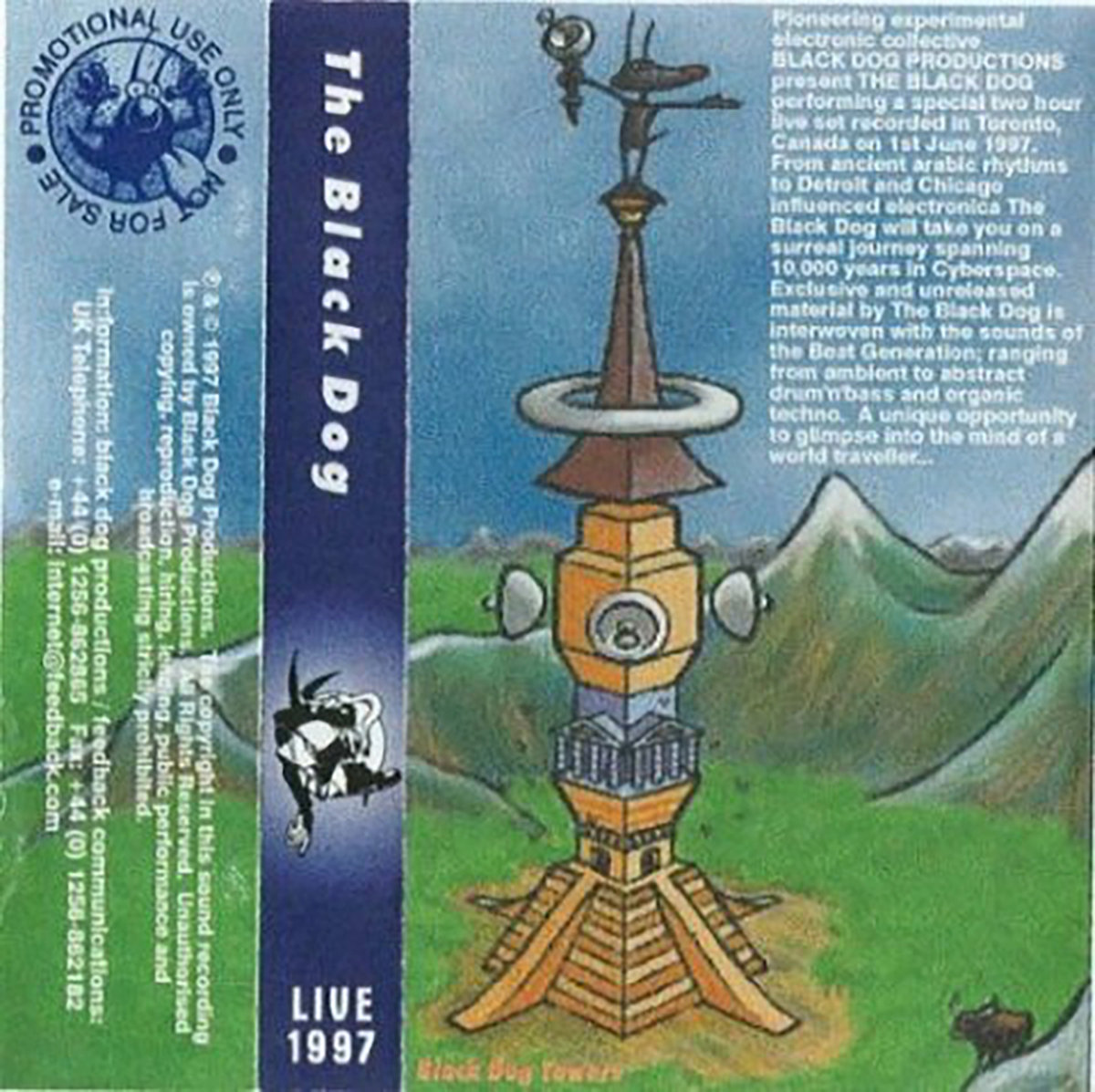
A track that featured on both the Peel session and the Live in Toronto recording is an epic middle easternish number featuring vocals by the sublime Israeli singer Ofra Haza. In 1998 this song was released as a single by Warner Music Group, Haza’s label. In keeping with Downie’s obsession with the ancient Near East, the single was named Babylon.
But - and with this era of The Black Dog, there’s always a but - the single featured remixes of Babylon rather than the original version. These remixes make no sense without the original to provide context. Why wasn’t the original mix (or something closer to it) released? My best guess is that Warners demanded something less idiosyncratic and more club-friendly than the original arrangement. Downie later claimed that Babylon was the work of which he was most proud, but for me it’s another case of nearly but not quite.
Another artefact exists, a track called Distant Lands. I only know it from a music video posted by Martin Dust (more on him later) on YouTube in 2006 with no explanation or date. From the track’s style I’m guessing it was made somewhere between 1996 and 2004, and if I had to hazard a guess I’d narrow it to 1997-1999ish. But I really don’t know. The track is a gentle, sly, and slightly enigmatic piece built around a shuffling break beat. The video features people dressed as match heads cavorting with a Black Dog Furry (it’s probably not Ken in the suit, but it’s tempting to imagine…) around what looks like Hampstead Heath. It has the feel of a student film; those involved have clearly put in quite a bit of effort and the the mix of music and visuals is quite charming.
After the somewhat inconclusive activity in 1997-1998 there was a long gap; the next Black Dog release wouldn’t be until 2002. During this time things did happen, however. Wikipedia states that Downie was joined by producers Steve Ash and Rob Knight and they worked on “a dozen” commercialish remixes; Discogs notes some appearances, though not a dozen. It’s not entirely clear when Ash and Knight started their involvement, but I’m guessing it was after Babylon.
The drought was ended in 2002 when The Black Dog released Unsavoury Products. This was a project inspired by the cut up techniques of William Burroughes and featured spoken word performances by Scottish poet Black Sifichi. This is an intriguing premise, and you’ll be unsurprised to learn that the resulting album is certainly idiosyncratic. The high concept, Downie’s production, and Sifichi’s performance are a bit creaky; it’s an album you have to listen to through your fingers, if that makes any sense. Once again though there are decent moments: the single Invisible Things - esp Jimmy Cauty’s remix - is an absolute banger. Mono or stereo? Mono.
Unsavoury Products’ followup remix album, Genetically Modified, was the last project of Downie’s solo (ish) years. The group was reportedly stiffed on royalties by label Hydrogen Dukebox, and Ash and Knight’s involvement ended.
It’s hard to know of what to make of The Black Dog’s post Warp period: everything that was released was worthwhile, yet each project tended to be one step forward (Downie did something) and one step back (it took him nowhere). We may certainly say that Downie wasn’t afraid to try out risky ideas, but there’s a Quixotic nature to the projects he chose to take on. In contrast, by 2004 Plaid had already released four post-breakup albums.
2005 - 2025
Most musical careers fade away, and by 2005 Downie had given post-1995 Black Dog a decent crack, without any real success. By rights he should have gotten a job at a local council and given up the music biz. Instead, something quite remarkable happened: two blokes from Sheffield, Martin and Richard Dust (henceforth M&R), invited Downie to produce music for their label Dust Science Recordings. M&R’s origin story isn’t well documented, but that semi-reliale oracle Gemini reckons that they had worked in sound design and game development. (Intriguingly, Dust Science Recordings seems to been created specifically for their collaboration with Downie.) Martin had known Downie for a while via a shared interest in Bulletin Board Systems. (Downie’s interest in BBSes is a little notorious; after the 1995 breakup Andy Turner lamented that Downie spent too much time on his bulletin board and not enough time making music [2].) Whatever the origin of Dust Science Recordings, M&R ended up not just producing Downie, but actively collaborating with him under the Black Dog aegis. This isn’t too disimilar to previous working arrangments, but M&R brought something that other collaborations had lacked (at least to any discernable degree): their own agenda for The Black Dog.
After feeling their way forward on a couple of EPs, notably the techno-heavy Bite Thee Back, the reconstituted Black Dog trio released the album Silenced. This disc is an excellent rehabilitation for the group, but - similar to Plaid’s Not For Threes - it’s a touch scattershot. There are three excellent tracks: Trojan Horus (parts I and II), Drexian City R.I.D.E, and Remote Viewing. The back half of the album slides drearily towards miserablist ambient, but production quality is much improved; the album even has differentiated left and right channels!!! Silenced was the most assured and professional The Black Dog had sounded since Spanners.
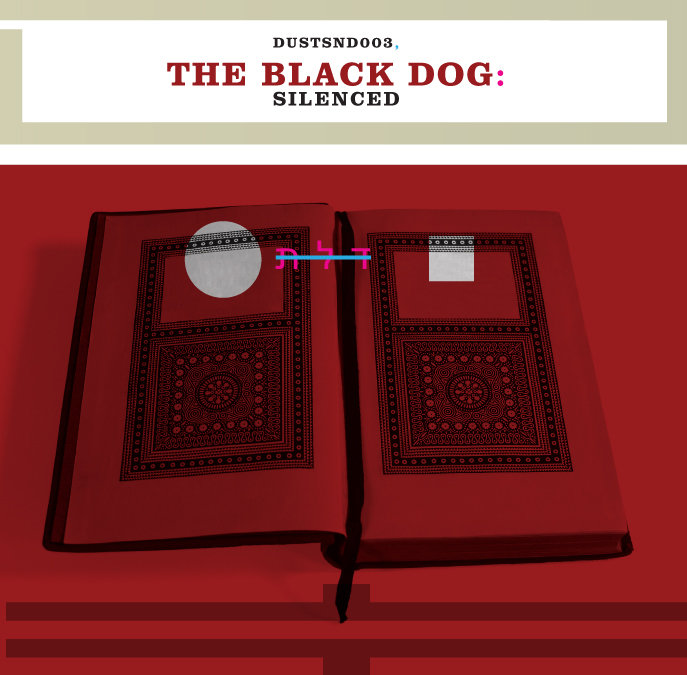
Further albums followed. 2007’s Radio Scarescrow was an LP of reasonably minimal techno. It’s competent, if open to the complaint that it was radically different to “traditional” Black Dog material. The next release, Further Vexations, is again dance-oriented, but much more melodic and accessible, and it’s my favourite “Dust” era Black Dog product. After that came the ambient album Music for Real Airports, a slightly self-important recasting of Brian Eno’s Music for Airports as nightmarish and dystopian. (Fair enough, perhaps, but you try concentratng and then transporting hundreds of thousands of passengers in claustrophobic flying tubes and see if you make it any more pleasant.) After 2010 numerous albums followed, either austere techno albums in the vein of Radio Scarecrow, or murky ambient albums in the “tradition” of Music for Real Airports.
In comparison to the “labellless” era it would seem The Black Dog went from famine to feast. But it’s not quite “they all lived happily ever after”. Aside from Silenced, which had indisputedly “Downian” moments, M&R Black Dog is unrecognisable from solo Downie Black Dog, let alone the Downie/Handley/Turner era.
Additionally M&R have brought a parochial obsession with Sheffield, and a Big Issue-style critique of contemporary UK culture. Are these changes “acceptable”? In one sense: yes, sure, why not; in another sense you don’t want to change so much that listeners wonder if there’s any continuity with the original Black Dog.
And yet I don’t think M&R’s takeover is malign. Downie doesn’t seem to have minded, and in the 90s he didn’t hold back from criticising his former bandmates or label. And for all that they’ve inserted their own preoccupations into The Black Dog’s music, M&R have been respectful to the old Black Dog discography, instigating rereleases of the original albums and EPs, and assisting Plaid in negotiations with Downie to liberate some of their Black Dog Productions contributions for the Plaid compilation Trainer. And while M&R Black Dog doesn’t reach the heights of the mid 90s in terms of innovation, they’ve made a better fist of things than Downie did post-breakup, so “it’s not all bad”. It might have been better if they’d released the music they did as “Dust Science”, but if it’s a choice between Black Dog ending in 2002 and the afterlife we have now, I’ll happily take it.
Plaid 1999 - 2022
Before concluding, it’s worth circling back to Plaid to see what they’ve been up to for the past quarter century. After Not For Threes they released Rest Proof Clockwork in 1999, a more scaled back and focused disc of instrumentals that provided a template for the rest of Plaid’s career to date. The complex time signatures and unusual harmonies remain from the Black Dog days, but are more mannered than before. Some tracks are achingly beautiful, others feel almost wilfully “difficult”, and others are playfully mischievous. Albums have been released fairly regularly: 9 of them between 1997 and 2022. Compared to the dramas of The Black Dog, Plaid’s story has been serene, if perhaps a little dull…
In 2004 it was clear that Plaid was much more successful than Ken Downie’s Black Dog. Today, though, The Black Dog frequently outranks Plaid for Spotify monthly listeners (both groups currently garnering over 100k). It’s not just Warp-era tracks that are included in The Black Dog’s “Popular” tracks list, either. This might be a function of TBD releasing a lot more material in past few years, coupled with Plaid not releasing an album since 2022. But Spotify’s metrics suggest that M&R Black Dog is now a considerable force in its own right, regardless of whether they’re “authentic” Black Dog. That said, the sounds of the two groups are so divergent that it’s hard to say they’re really in competition.
Most IDM followers would rank Plaid ahead of solo Downie or M&R Black Dog in terms of musical quality and innovation, and I would broadly agree. But an observation I’d make is that while Plaid make great music, they don’t make great albums. This might seem counterintuitive but being able to make beautiful tracks doesn’t mean they sum to a cohesive whole when listened over a span of 40ish minutes. Good albums take you on a journey; M&R era albums Further Vexations and Loud Ambient are examples of this. But - and I’ll admit this is subjective - I don’t think Plaid albums do. They feel more like “here’s the latest 10 tracks we’ve made” than an expression of something they particularly wanted to say.
This brings me to a long-held thesis: while H&T may have wearied of working with Downie, they did lose something choosing to no longer work with him. Downie’s use of middle eastern percussion, alien abductee samples, and pared track arrangements gave the pre-1996 Black Dog albums much of their atmosphere, pacing, and character. Take the album Temple of Transparent Balls as an example: one of the more brilliant tracks on the album, Sharp Shooting on Saturn (ascribable to Handley and probably Turner) is more technically complex than The Crete that Crete Made (almost certainly a Downie track), but TCTCM provides a contemplative mood and a simplicity that are valuable regardless of its deficiencies, and the track makes a for a dreamy album closer. An album that contains both of these tracks is better than one that only features one or the other. I have a quip that sums this up: Plaid’s best album is Spanners…
There is one Plaid album that stands out for me, though: 2022’s Feorm Falox. It isn’t signficiantly better than the others musically; what differentiates it is that the duo enlisted video artist “Emma Catnip” to produce AI-derived visualisations of the album’s tracks, and she also performed as VJ for the subsequent Plaid tour. Serendipitously this collaboration occurred right at the advent of generative AI, meaning that the weird morphing visuals accompanying the music feel both innovative, vivid, and on-the-cuspy. The collaboration recaptured the dawn-of-the-Internet spirit that marked the 90s heyday of the Black Dog (remember Ken and his goshdarned BBS…). Now you can argue that Catnip’s involvement isn’t musical, and therefore not relevant, but I see her input providing a focusing role approximating Downie’s. Interestingly Catnip continues to tour with Plaid years after Feorm Falox was released.
RIP Ken
So now Ken’s gone. A couple of months before he died, The Black Dog released the album Loud Ambient, which rocks it old school (if you will) with beat-oriented tracks featuring accessible melodies of an “I’ve got a Eurorack modular and I’m going to let the sequencer run” variety. I don’t know if Downie contributed anything to the album, but as it’s closely preceded his death, Loud Ambient feels like a “return to form” - at least to me - and a pre-emptive tribute to him.
The dust hasn’t settled yet, but where does Downie sit, in the history of British electronica? I’ve always felt the Black Dog/Plaid industrial complex (1989 to 1995) rates at the top of IDM alongside Autechre. (Others might place Aphex Twin and Squarepusher at the pinnacle, but as someone who doesn’t think IDM should be synonymous with “showing off”, “having a laugh”, and “making my ears bleed”, I don’t.) I’ve always thought Downie was the soul, if not the musical talent, of the original Black Dog. Outside of classic IDM, we get a sense from Downie’s “solo” years of a passionate and Quixotic mind, unafraid to explore unusual and risky avenues. That’s well worth celebrating. Of the man himself, we don’t really know enough about him or his story to get a strong sense of him, but there’s a hint in his works and deeds that he was a slightly Outsiderish character. I’d be keen to read a biography of him; if M&R are ever stuck for things to do, that would be a worthy project to which they could apply themselves.
What did the internet have to say about Ken’s death? Well I did a brief trawl of Reddit and was pleased to find expressions of grief (here, here, and here). While more commenters paid tribute to Plaid-era Black Dog, M&R-era releases were also praised. There was one criticism of M&R though a couple of times a familiar criticism was raised:
The early stuff played a big part of me getting into Techno, hopefully the Dust brothers will show some respect and stop milking the name
…so it’s not just me who feels discomforted about the group’s current identity.
This has been a long and fairly sprawly essay about a group of fairly minor importance in the history of music, but I find the Black Dog’s saga by turns encouraging, mesmerising, dismaying, intriguing and disquieting. Whatever happened it was always fascinating, and hopefully this essay is a both a fitting tribute to the group and a respectable summation of my 30 year obsession with The Black Dog. Above all: vale Ken.
Footnotes
[1] https://web.archive.org/web/20010303094644fw_/http://www.beatnik.demon.co.uk/history.htm
[2] Regrettably I don’t have a source for this other than my own memory of various Plaid interviews I read in the late 90s.